
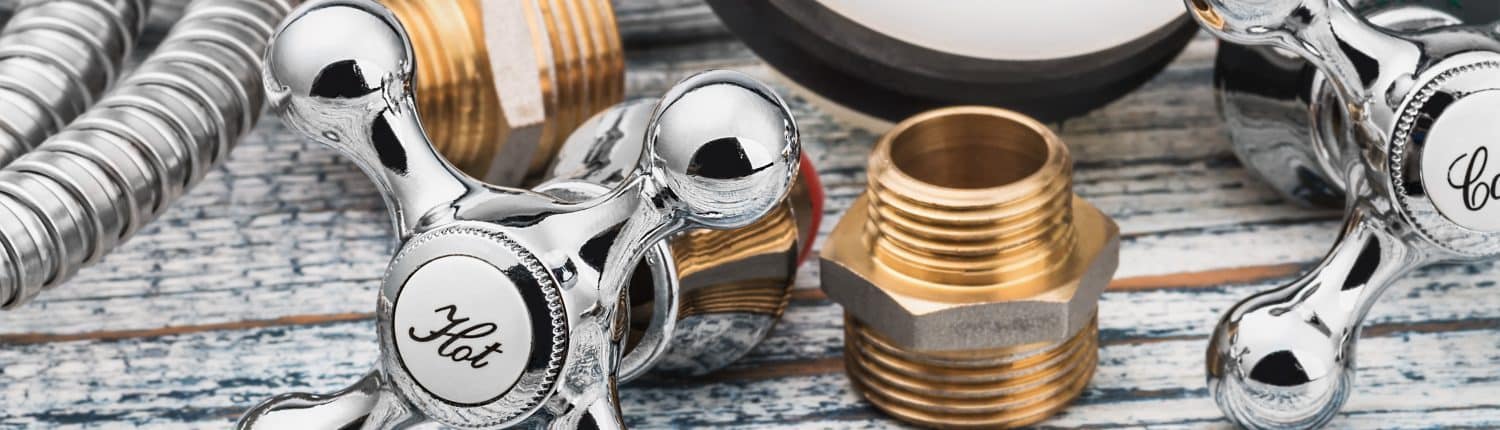
Professional Plumbing Repair Services in Topeka: What You Actually Need to Know
We need to start with something that might seem obvious but gets overlooked constantly: plumbing repairs aren’t all the same, and the approach that works for one situation can make another worse. After working on plumbing systems throughout Topeka since 1971, we’ve learned that homeowners deserve straight talk about what’s happening in their homes, not sales pitches or scare tactics.
The plumbing repair calls we get fall into roughly three categories. First, there are genuine emergencies – burst pipes, sewer backups, water heaters failing catastrophically. Second, are problems that seem urgent but can actually wait a bit if needed – a toilet that won’t stop running, a slow drain that’s getting slower, a faucet that’s developed a persistent drip. The third category is preventive work, which honestly doesn’t get enough attention until something breaks.
What Actually Constitutes a Plumbing Emergency in Topeka
Let’s be specific about this because we’ve seen homeowners panic over things that can wait, and we’ve also seen people delay calling about situations that are actively causing damage to their homes.
If you have water actively spraying or flooding anywhere in your house, that’s a plumbing emergency. Period. We don’t care if it’s two in the afternoon or two in the morning – you need to shut off your water main if you can locate it and call for help immediately. We’ve responded to burst pipe calls where homeowners waited even 30 minutes thinking they could contain it with towels, and the damage was a lot worse than if they’d called right away.
Sewer backups are emergencies, too, though for different reasons. The health hazard alone makes this something you can’t ignore or try to handle with a bottle of drain cleaner from the hardware store. When sewage is coming back up through your drains, there’s a blockage in your main line that requires professional equipment to clear properly. We’ve seen people dump caustic chemicals down their drains for days trying to avoid the cost of a service call, only to make the problem worse and more expensive to fix.
Here’s one that surprises people: a water heater that’s leaking at the base counts as an emergency even if it’s just a small puddle. That leak indicates the tank is failing, and tank failures don’t happen gradually – they accelerate. A small leak today could be 40 or 50 gallons of water flooding your basement tomorrow morning. We’ve replaced enough water heaters in Topeka to know that once they start leaking from the tank itself (not the fittings, which can sometimes be tightened), you’re on borrowed time.
Common Plumbing Repairs We Handle Throughout Topeka
The age and construction style of Topeka homes create some patterns in the repairs we do. Homes built in the 1950s and 60s, particularly in the Oakland and College Hill neighborhoods, often have galvanized steel pipes that are now 60-70 years old. These pipes corrode from the inside out. Homeowners don’t see the problem because it’s happening inside the pipe walls, but the water flow gets restricted, pressure drops, and eventually you start getting leaks at joints or even pinhole leaks in the pipe itself.
When we’re called to repair a leak in one of these older homes, the honest conversation has to include talking about whether we’re just fixing this one spot or whether the whole system is approaching the point where repairs don’t make sense anymore. We’re not trying to sell anyone a whole-house repipe, but we’d be doing you a disservice if we didn’t point out that we are likely to be back fixing another leak in six months if the pipes throughout the house are in similar condition.
Toilet repairs probably account for 20-30% of our service calls. The basic mechanisms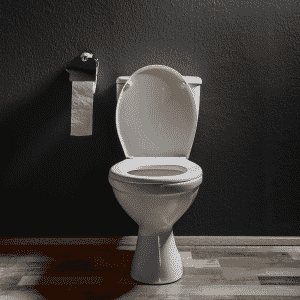 inside a toilet tank – the flapper, fill valve, flush valve – these components wear out. They’re designed to last maybe 5-7 years with normal use, and Kansas water quality can accelerate that wear. A toilet that runs continuously is usually a flapper that’s not sealing properly or a fill valve that’s not shutting off. These repairs are straightforward and not expensive, but they do require the right parts and proper adjustment.
The more complex toilet repairs involve the wax ring seal or the flange that connects the toilet to the drain. If your toilet rocks when you sit on it, or if you see water seeping out at the base, we need to pull the toilet and inspect what’s happening. Sometimes the bolts have just loosened over time. Sometimes the wax ring has failed. Worst case, the flange itself is broken or corroded, which requires more extensive repair. Lower plumbers have seen situations where a rocking toilet was ignored for months, and the constant movement actually damaged the floor underneath. What could have been a $200 repair becomes a $2,000 repair involving subfloor replacement.
Garbage Disposal Repairs
Garbage disposals fail with some regularity, especially if they’ve been abused. Running fibrous vegetables like celery through them, putting coffee grounds down regularly, or using them without enough water flow will shorten their lifespan considerably. Sometimes a disposal can be repaired – maybe it’s jammed, or the reset button on the bottom needs to be pressed, or the overload has tripped. Other times, particularly if the disposal is more than 10-12 years old, replacement makes more sense than repair. The labor cost to repair and replace is often similar, and a new disposal comes with a warranty.
Drain Cleaning and Sewer Line Repairs
Drain problems range from simple to complex, and the approach matters. A clogged kitchen sink is usually grease buildup or food debris in the trap or the drain line immediately after the trap. We can typically clear these with a cable snake in 20-30 minutes. But if you’re getting repeated clogs in the same drain every few months, something else is going on.
Main sewer line stoppages are a different animal entirely. When multiple drains in your house are backing up, or when water comes up in the basement floor drain, the blockage is in your main line between the house and the city connection. Tree roots are the most common culprit, especially in older neighborhoods where there are mature trees and the sewer lines are clay tile rather than PVC.
We use video camera inspection on sewer lines when there’s a recurring problem or when we need to diagnose what’s causing the blockage. The camera shows us exactly what we’re dealing with – roots, collapsed pipe, offset joints, bellied sections where the pipe has settled. This information determines whether we can clear the line and maintain it going forward, or whether you’re looking at sewer line replacement.
Topeka’s clay soil causes specific problems with sewer lines. The soil expands and contracts with moisture changes, and over decades this movement can cause pipes to shift, separate, or belly. A bellied section is where the pipe has sagged, creating a low spot where solid waste accumulates. You can clear it with a cable, but it fills back up because the structural problem remains. The permanent solution requires excavating and replacing that section of pipe with proper bedding and slope.
Water Heater Repair and Replacement Decisions
Water heaters probably generate more questions than any other plumbing component. The typical tank water heater lasts 8-12 years, though the can fail sooner and occasionally last longer. The hard water in many parts of Topeka accelerates sediment build up inside the tank, which reduces efficiency and can cause premature failure.
When a water heater stops producing hot water, the problem could be as simple as a tripped breaker (on electric units) or a pilot light that’s gone out (on gas units). If the pilot won’t stay lit, that’s usually a thermocouple issue – a $100-150 repair. If an electric water heater’s heating element has failed, that’s also a repairable issue, though if the unit is more than 7-8 years old, you need to consider whether putting money into repairs makes sense.
The decision point between repair and replacement depends on the age of the unit and the nature of the problem. If your water heater is 3 years old and needs a $200 repair, that’s an easy decision – you repair it. If it’s 11 years old and needs the same repair, you have to factor in that you’re near the end of the unit’s life expectancy anyway. Will that repair give you another few months or another few years? There’s no certain answer, but our experienced plumbers can give you an informed opinion based on the overall condition of the unit.
Tankless water heaters are becoming more popular, and they do offer advantages – endless hot water, energy efficiency, longer lifespan. They also require different maintenance. The heat exchanger needs to be descaled annually in areas with hard water (which includes most of Topeka). Ignoring this maintenance will void your warranty and can cause expensive repairs. We handle tankless water heater service and repair, and we’re honest with homeowners that they require more attention than traditional tanks.
Leak Detection and Hidden Water Damage
Some of the most frustrating calls Lower gets involve mysterious water leaks. The water bill has doubled, but the homeowner can’t find where water is escaping. Or there’s a damp spot on a ceiling, but no obvious source. These situations require methodical investigation.
We start with the simple stuff – checking all the fixtures, looking for running toilets, testing the pressure relief valve on the water heater. If those don’t reveal the problem, we move to electronic leak detection. The technology uses acoustic sensors to detect the sound of water escaping under pressure. We can locate leaks in walls, under concrete slabs, and in underground lines without tearing apart your house.
Slab leaks are particularly problematic in Topeka homes built on concrete foundations. The copper water lines run through or under the concrete slab, and if one develops a leak, you typically won’t see it until significant water has escaped. The first indication might be a warm spot on the floor (if it’s a hot water line), higher than normal water bills, or the sound of running water when everything is turned off. Slab leak repair sometimes requires breaking through the concrete to access the damaged section, though we can occasionally reroute lines to avoid that disruption.
Fixture Repairs and Replacements
Faucets seem simple, but they’ve become increasingly complex over the years. Modern faucets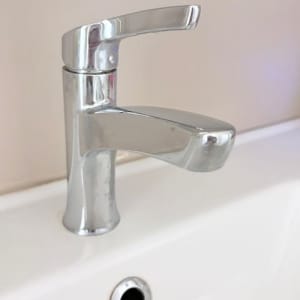 have ceramic disc cartridges, ball valves, or cartridge systems rather than the old compression washers. When a newer faucet develops a leak, the repair usually involves replacing the cartridge, which can cost $50-150 depending on the faucet model. Some high-end faucets have proprietary parts that are expensive and must be ordered.
We advise homeowners to keep their paperwork when they buy faucets because warranty coverage varies dramatically. Some manufacturers have lifetime warranties on finish and function. Others cover parts for a year and that’s it. If your two-year-old faucet needs a $120 cartridge and you don’t have the warranty information, you might end up replacing the entire faucet because the cost is similar.
Outside faucets (hose bibs) are vulnerable to freeze damage here. Even if you shut off the interior valve and drain the line, water can remain trapped and freeze if the hose bib isn’t frost-free or if it’s not sloped properly. We replace dozens of freeze-damaged hose bibs every spring in Topeka. The repair involves cutting out the damaged section and installing a new frost-free faucet, which isn’t particularly expensive but does require cutting into the wall to access the pipe.
The Economics of Plumbing Repairs
Lower understands that plumbing repairs are unexpected expenses that hit the household budget hard. Nobody plans for their water heater to fail or their main sewer line to back up. What we try to do is give homeowners enough information to make good decisions about repairs versus replacement, about what can wait and what can’t.
Sometimes the most economical long-term decision isn’t the cheapest immediate option. If your house has old galvanized pipes and we’re repairing a leak, you could spend $300 fixing this leak, then $300 fixing another leak six months from now, then another $300 after that. At some point, it makes more financial sense to replace the problematic section or even the whole system. The upfront cost is higher, but you’re done dealing with it.
The same logic applies to water heaters, old fixtures, and other plumbing components. We try to help homeowners see the big picture rather than just addressing the immediate crisis. Our goal is to be honest about what we’re finding and what we think makes sense given the age and condition of your plumbing system.
Why Proper Diagnosis Matters
One thing that frustrates us a lot is getting the call to fix another company’s incomplete or incorrect repair. Not long ago, we went to a house in west Topeka where the homeowner had paid someone to clear their kitchen drain three times in four months. Each time, the guy would snake the drain, charge them, and leave. We ran a camera through the line and immediately saw the problem – there was a sharp 90-degree elbow in the line where someone had done a hack job connecting to the main drain years ago. That sharp turn caught debris and created recurring clogs. The proper repair involved opening the wall, removing that elbow, and installing a proper swept fitting. More expensive than snaking a drain, absolutely, but it fixed the actual problem.
Diagnosis costs a bit more upfront than just throwing parts at a problem and hoping something works, but it saves money and aggravation in the long run. We use cameras, pressure testing, electronic detection equipment – whatever it takes to understand what’s actually wrong before we start cutting pipes or tearing out fixtures.
Working in Topeka’s Older Homes
A significant portion of Topeka’s housing stock was built before 1960, and these homes present specific challenges. The plumbing systems were designed for different water usage patterns – fewer bathrooms, smaller water heaters, less demand. Modern families put more stress on these old systems than they were designed to handle.
We also deal with plumbing that’s been modified over the decades, not always by professionals. Too many times we’ve opened a wall to find repairs that were done with whatever materials were handy rather than proper plumbing fittings. A garden hose connected to copper pipe with hose clamps. Compression fittings used where they shouldn’t be. PVC glued directly to galvanized threads without proper adapters. These shortcuts eventually fail, usually at the worst possible time.
The good news is that older homes were often built with larger pipe than modern minimum code requires, and the drain lines are typically cast iron, which lasts forever if it doesn’t get cracked or corroded through. The bones of these old plumbing systems can be sound; they just need updating in specific areas.
Our Approach to Emergency Repairs
When you call us for an emergency, our first priority is stopping the immediate problem – getting the water shut off, clearing the dangerous backup, preventing additional damage. Once the crisis is under control, we can properly assess what needs to be repaired and discuss options with you.
Emergency repairs sometimes mean we’re making do with what’s on the truck or what we can get from local suppliers outside normal business hours. Our plumbers carry extensive inventory, but occasionally we’ll need to do a temporary repair and come back to complete a permanent fix. We’re always upfront about whether what we’re doing is permanent or temporary.
The other thing about emergency repairs is that they sometimes reveal larger issues. When we’re fixing that burst pipe in your basement, we can see the condition of the other pipes nearby. If we’re clearing your main sewer line, the camera shows us what’s happening along the entire line. We’re not trying to sell you additional work, but we’d be remiss not to point out problems that are developing.
Preventive Maintenance and Regular Service
Most plumbing disasters are preventable with regular attention. We recommend having your plumbing system inspected annually, particularly if your home is more than 20 years old. During an inspection, we check fixture shutoffs to make sure they’re working (these often seize up from lack of use), test the pressure relief valve on your water heater, look for signs of corrosion or leaks, verify that drain vents are clear, and assess the overall condition of visible plumbing.
Water heater maintenance deserves special mention because it directly extends the life of the unit. Draining a few gallons from the tank every six months removes sediment. Checking the anode rod and replacing it when necessary prevents the tank from corroding through. These simple maintenance tasks can add years to your water heater’s life, but most homeowners never do them.
For homes with septic systems, regular maintenance is even more critical. Your main sewer line should be scoped every few years if you have trees nearby, particularly willows, cottonwoods, or other water-seeking species. Root infiltration happens gradually, and catching it early means you can have the line cleaned before the roots cause a complete blockage or damage the pipe.
Call Lower When You Need Professional Plumbing Repair
We’ve been fixing plumbing problems in Topeka since 1971, and we’ll be here when you need us. Whether it’s an emergency or a repair that can be scheduled at your convenience, we bring the same level of expertise and commitment to doing the plumbing job right. Reach us at (785) 357-5123 any time.